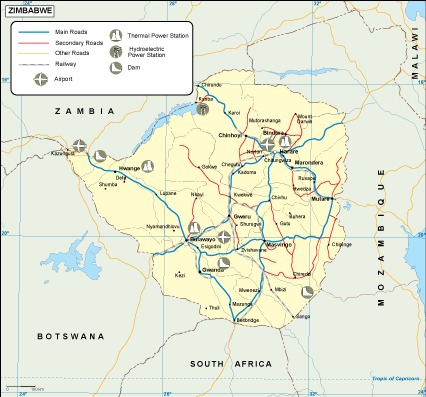
Zimbabwe offers a unique and compelling investment proposition for discerning investors seeking long-term value in emerging and frontier markets. Located at the heart of Southern Africa, the country combines abundant natural resources, strong human capital, and improving investment frameworks. While challenges exist, Zimbabwe presents significant opportunities for well-structured, properly appraised, and professionally managed investments.
1. Strategic Geographic Position
Zimbabwe’s central location in Southern Africa provides efficient access to regional and continental markets. The country is well connected through established road, rail, and air networks linking it to South Africa, Mozambique, Zambia, and Botswana. Membership in the Southern African Development Community (SADC) and the African Continental Free Trade Area (AfCFTA) allows investors to leverage preferential trade arrangements, regional supply chains, and export-oriented business models.
2. Abundant Natural Resources
Zimbabwe is one of Africa’s most resource-rich economies, with substantial reserves of:
Platinum Group Metals (PGMs) – among the largest globally
Gold – with both large-scale and small-scale mining potential
Lithium – a strategic mineral critical to global energy transition
Chrome, nickel, coal, diamonds, and iron ore
These resources present opportunities not only in extraction but also in beneficiation, processing, manufacturing, and export-focused value chains, aligning with global demand for sustainable and diversified supply sources.
3. Strong Agricultural and Agribusiness Potential
Agriculture remains a cornerstone of Zimbabwe’s economy, supported by fertile soils, diverse agro-ecological zones, and extensive water resources. Investment opportunities exist across the full value chain, including:
Commercial crop and livestock production
Irrigation and climate-resilient farming
Agro-processing and food manufacturing
Storage, logistics, and export marketing
With increasing regional demand for food security, agribusiness investments in Zimbabwe offer scalable and sustainable returns.
4. Skilled Human Capital
Zimbabwe boasts one of the highest literacy rates in Africa and a strong tradition of technical and professional education. The workforce is:
Highly trainable and adaptable
Cost-competitive compared to regional peers
Experienced in mining, agriculture, manufacturing, finance, ICT, and professional services
This human capital advantage supports productivity, operational efficiency, and long-term business sustainability.
5. Investment Incentives and Regulatory Framework
The Government of Zimbabwe continues to implement reforms aimed at improving the ease of doing business and enhancing investor confidence. Key features include:
Special Economic Zones (SEZs) offering tax incentives and customs benefits
Duty-free importation of capital equipment for qualifying projects
Investment protection and bilateral investment agreements
A One-Stop Investment Services Centre to streamline licensing and approvals
These measures are designed to lower entry barriers and improve project viability when investments are properly structured.
6. Infrastructure Development and PPP Opportunities
Zimbabwe faces infrastructure gaps in power, transport, water, and urban development—creating significant opportunities for private sector participation and public-private partnerships (PPPs). Priority areas include:
Renewable and thermal energy generation
Transport and logistics infrastructure
Industrial parks and logistics hubs
Water, sanitation, and housing developments
Infrastructure investments play a critical role in unlocking broader economic growth and offer long-term, stable returns.
7. Growing Opportunities in Emerging Sectors
Beyond traditional sectors, Zimbabwe is experiencing growth in:
Renewable energy and climate finance
Tourism and hospitality, leveraging iconic destinations such as Victoria Falls
Financial services, fintech, and digital platforms
Real estate and mixed-use developments
ICT and innovation-driven enterprises
These sectors present diversification opportunities for investors seeking balanced portfolios.
8. Undervalued Market with First-Mover Advantages
Zimbabwe remains relatively undercapitalised compared to its resource base and economic potential. This creates:
Attractive entry valuations
Opportunities for strategic partnerships
First-mover advantages in emerging industries
Investors who undertake thorough investment appraisal, risk assessment, and structuring are well positioned to benefit from future economic stabilization and growth.
9. Risk Awareness and Informed Investment
Zimbabwe’s investment environment requires careful consideration of macroeconomic, regulatory, and operational risks. Successful investment outcomes depend on:
Robust feasibility studies
Financial modelling and sensitivity analysis
Regulatory and policy risk assessment
Strong governance and compliance structures
Informed decision-making is essential to mitigating risk and enhancing returns.
10. ARC Financial Advisory – Your Strategic Partner
At ARC Financial Advisory, we provide independent, professional advisory services to support investors throughout the investment lifecycle. Our services include:
Investment appraisals and feasibility studies
Financial modelling and valuation
Market entry and structuring advice
Risk analysis and mitigation strategies
Transaction and project advisory
Our deep understanding of Zimbabwe’s economic landscape enables us to help investors navigate complexity, structure bankable projects, and achieve sustainable investment outcomes.